The Art of Slowing Down: Creating Calm Through Everyday Rituals
There was a time when rest felt natural.
Now, slowing down almost feels unfamiliar.
We move quickly through our days—scrolling, multitasking, responding, rushing from one thought to the next. Even moments meant for rest are often filled with noise.
And somewhere within all of that, we forget how to simply be.
The art of slowing down is not about doing less out of laziness or escaping responsibility. It’s about creating intentional pauses within everyday life—moments where your mind softens, your body relaxes, and your nervous system finally exhales.
Sometimes, healing begins not with doing more, but with allowing yourself to slow down enough to feel present again.
Why We Struggle to Slow Down


Modern life rewards speed.
We are constantly encouraged to:
stay productive
stay available
stay connected
stay busy
Over time, busyness becomes normalized—even when it leaves us emotionally exhausted.
Many people don’t realize how deeply overstimulation affects them until they experience moments of intentional stillness.
Signs you may need to slow down:
feeling mentally restless all the time
difficulty relaxing without distraction
emotional burnout
overthinking at night
feeling disconnected from yourself
constantly rushing through routines
Slowing down doesn’t require changing your entire life overnight. Often, it begins with creating small rituals that bring you back to yourself.
The Difference Between Routine and Ritual
A routine helps you function.
A ritual helps you feel.
That’s the difference.
A routine is automatic. A ritual is intentional.
Making tea can be a routine.
Preparing tea slowly, lighting a candle, sitting quietly, and allowing yourself to pause—that becomes a ritual.
The same applies to self-care.
A quick bath is routine.
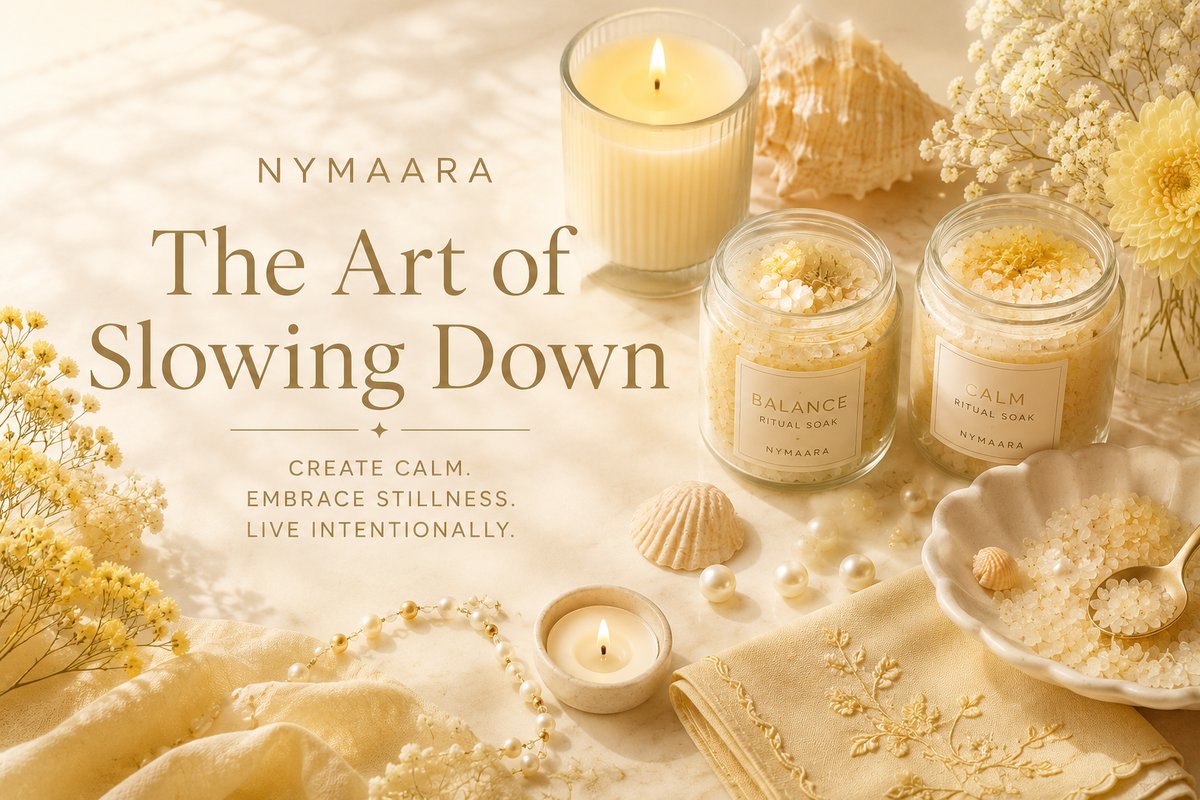
A warm soak with calming salts, soft lighting, intentional stillness, and a moment to breathe becomes an experience.
Rituals transform ordinary moments into spaces of presence.
Why Rituals Matter in a Fast-Paced World

Rituals create emotional grounding.
They gently tell your mind and body:
You are safe enough to pause.
Simple rituals can help:
reduce mental overstimulation
create emotional balance
encourage mindfulness
improve relaxation
support better sleep
create a stronger connection with yourself
Most importantly, rituals create moments where you stop living on autopilot.
The Beauty of Sensory Rituals
One reason rituals feel calming is because they engage the senses.
Soft textures. Warm water. Gentle aromas. Candlelight. Mineral salts dissolving slowly into water.
These experiences create signals of comfort and calm for the nervous system.
This is why sensory rituals—especially salt soaks and intentional bath rituals—feel deeply restorative after emotionally heavy days.
Salt rituals have been used for centuries across cultures as symbols of:
cleansing
grounding
renewal
protection
emotional release
Today, they continue to offer something modern life often lacks:
stillness.
How to Practice the Art of Slowing Down
1. Create a Transition Ritual


Many people carry the stress of the day directly into the night.
Instead, create a small ritual that marks the transition from “doing” to “resting.”
This could be:
washing your face slowly
lighting a candle
preparing a warm soak
putting away your phone for 15 minutes
listening to calming music
Even small pauses help your body shift into a calmer state.
2. Romanticize Small Moments
Slowing down often begins by paying attention again.
Not every meaningful moment has to be grand.
A quiet morning. Fresh sheets. A cup of tea. Warm water. A calming soak before bed.
When approached with intention, ordinary moments begin to feel softer and more nourishing.
This is the heart of intentional living:
finding presence in the everyday.
3. Create a Night Ritual


The way you end your evenings affects the way you feel the next day.
A calming night ritual may include:
a mineral salt soak
journaling
dim lighting
deep breathing
quiet reflection
gentle stretching
Ritual blends and soothing soaks can help create a sensory experience that encourages emotional release and relaxation before sleep.
Over time, your mind begins associating these rituals with safety, stillness, and rest.
4. Allow Yourself to Do Less
One of the hardest parts of slowing down is letting go of the guilt attached to rest.
Rest is not laziness.
Stillness is not unproductivity.
You do not have to earn moments of peace.
Sometimes the most restorative thing you can do is simply stop rushing yourself.
5. Build a Lifestyle Around Calm, Not Escape

True calm is not created through occasional escapes alone.
It’s created through small, consistent practices that support your emotional wellbeing daily.
This may look like:
creating quieter mornings
reducing overstimulation
making space for intentional rituals
slowing your evenings down
choosing sensory experiences that comfort your mind and body
The goal is not perfection.
The goal is softness.
How Ritual Salt Blends Support Slower Living
Ritual salt blends and calming soaks help transform self-care into intentional experience.
The combination of:
mineral-rich salts
soft botanicals
calming textures
mindful rituals
encourages moments of pause in a world that constantly demands speed.
These rituals become reminders to:
reconnect with yourself
soften mental noise
create emotional space
return to stillness
Not as luxury alone—but as care.
Final Thoughts
The art of slowing down is not about escaping life.
It’s about learning how to fully arrive within it.
A slower moment.
A deeper breath.
A quiet ritual at the end of the day.
Sometimes, that is where peace begins.
Disclaimer
This content is intended for wellness and relaxation purposes only and does not replace professional medical or mental health advice.