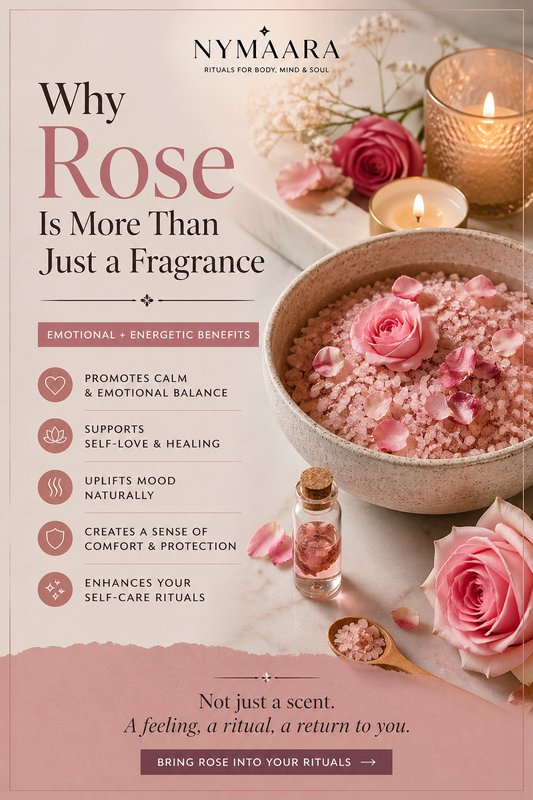
Why Rose Is More Than Just a Fragrance
Why Rose Is More Than Just a Fragrance (Emotional + Energetic Benefits)
Introduction
Rose is often seen as a symbol of beauty and romance—but its value goes far beyond fragrance.
For centuries, rose has been used in wellness rituals, skincare, and emotional healing practices. Its scent is not just pleasant—it has a subtle yet powerful effect on how we feel.
At Nymaara, we see rose as more than an ingredient.
It’s a sensory and emotional experience.
🌿 The Emotional Benefits of Rose
1. Promotes Calm and Emotional Balance
The scent of rose is known to gently calm the mind. It doesn’t overpower—it softens.
It can help:
Ease stress and tension
Reduce feelings of overwhelm
Create a sense of emotional comfort
2. Supports Self-Connection
Rose is often associated with the heart space—not in a mystical way, but in how it encourages softness and openness.
In a fast-paced world, this matters.
Using rose in rituals can help you:
Slow down
Become more present
Reconnect with your own emotions
3. Enhances Mood Without Stimulation
Unlike strong citrus or minty scents, rose works subtly.
It uplifts without overstimulating—making it ideal for:
Evening rituals
Bath soaks
Wind- down routines
✨ The Energetic Perspective (Grounded View)
In wellness traditions, rose is often linked to:
Emotional release
Gentle energy cleansing
Creating a sense of safety and warmth
Whether you see this as “energy” or simply emotional response to scent, the effect is real—rose helps you feel softer, calmer, and more grounded.
🛁 How to Use Rose in Your Self-Care Ritual
Add rose-infused salts to your bath
Use a rose-based body oil after shower
Incorporate rose mist into your night routine
The key is not just usage—but mindful usage.
❌ Common Misconceptions
“Rose is too basic” → In reality, it’s one of the most complex natural aromas
“It’s only for fragrance” → It has emotional and sensory benefits
“All rose products are the same” → Quality and formulation matter significantly
💫 Final Thoughts
Rose isn’t loud or dramatic—it’s quietly powerful.
It works best when you slow down enough to experience it.
And sometimes, that softness is exactly what we need.